Skip to content

Free quilting video tutorials from Missouri Star

Quilting Tutorials
Homespun E24 | Teresa Coates

Homespun E24 | Teresa Coates

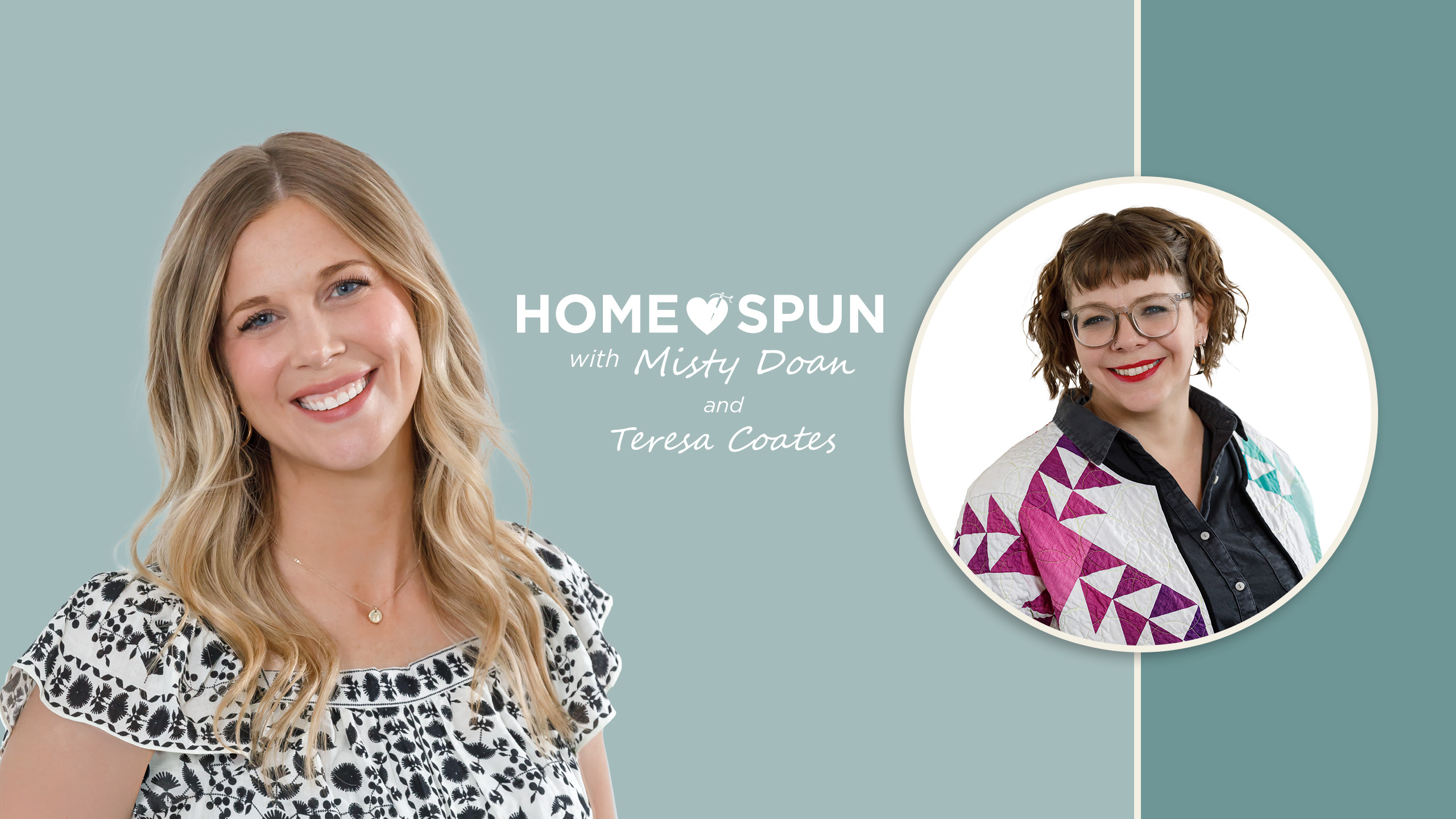
In this episode of Homespun, join Misty as she chats with Teresa Coates, accomplished sewing educator, quilter, and pattern designer. In Misty’s interviews with designers, makers, and influencers in the world of fabric and fiber arts, you’ll meet the people who have a hand in creating the items that inspire you and spark your creative fire! Hear their stories, learn their processes, share in their joys and challenges, and see their creations.
Instructor

Misty Doan

Misty Doan grew up surrounded by sewing and quilting. She loves spending time sharing tutorials each week each week, and when she’s not stitching up one of her fun sewing projects for home decor, most likely you’ll find her hanging out with her husband and three awesome kids or working on a house project.

Common Questions

What is covered in Homespun E24 | Teresa Coates?

In this episode of Homespun, join Misty as she chats with Teresa Coates, accomplished sewing educator, quilter, and pattern designer. In Misty’s interviews with designers, makers, and influencers in the world of fabric and fiber arts, you’ll meet the people who have a hand in...

How long is the tutorial video?

The tutorial video is 00:28:51.
Video Transcript

hi everyone welcome to Homespun where creativity and Community come together I am your host Misty Don and today I'm joined by Teresa coats of crinkle dreams she has an incredible journey where she learned to sew at a young age and has made the leap into the industry as a fabulous educator and pattern [Music] designer Teresa thank you so much for being here with me happy to be here you know we're getting to spend a good amount of time together filming tutorials and now I'm really glad to have you so to begin with why don't you tell everyone how you got started with sewing so I started sewing and I was just a little kid my mom is a sewer my grandmother was a sewer and um I started actually a church as a little kid and remember we had a we had a class where we made a dindle skirt do you know what a dindle is I don't so it's basically where you have just a waistband and then it's a gathered skirt okay so one that looks really good on you when you're 12 yes um so we made one of those that was one of my first projects and from there I just kind of kept sewing through my teenage years and I stopped for a while in my early 20s because it was easier just to buy clothes somewhere else um and then when my kids were born when I was pregnant with my son that's when I got into quilting okay and so back in '92 I made my first quilt and then it's just been you know ever since and now my career is here and yeah I absolutely love it I love that so how did you make the jump from hobbyist to having it be your career so it's kind of funny cuz I went to college and I got an English degree CU I wanted to work for a magazine okay and the magazine that I ended up working for first was Fab shop news which is a magazine for the industry for quilt shops and so I'd actually never been to a quilt shop before when I got that job and she was like one of the things I want you to do is go visit quilt shops and so I visited a few in the Portland area and I was like this is a whole thing this is so different than the big box stores um and that was kind of how I got the leap into it so i' actually wanted to be a writer editor ended up working I worked there for a few years and then it's just sort of tumbled snowballed from there yeah exactly and so you are kind of a very well-known teacher these days so how did you make that leap into teaching so I taught at um a store in Portland called Fabric Depot okay which probably is remembered fondly by a lot of people it was a very big store it was great and I got a job there doing social media and that's what I kind of ended up working in the industry a little bit doing social media for a couple different companies I ended up there and then they needed a a teacher for some class and the teacher wasn't available so they asked me to teach it I was like I'll do it I'll do it and I realized I loved it and I kind of it really snowballed from there is that I taught a few classes I taught a block of the month like I just got more and more and then a job opening came up at Shannon fabrics and they were looking for an educator and I was like I'll do it so I ended up moving to LA and working for Shannon fabrics for the next eight years doing education and that was primarily what I've done there is teaching and then writing to writing the tutorials writing the patterns all that sort of stuff is what I did and then now I've launched my own little thing crinkle you're off on your own with crinkle dreams I love that and and when you were at Shannon I think that's when we first met and I just was so fascinated by all the incredible tips that you came up with because I I must say for a lot of people I don't think I'm alone in this like cuddle can be scary can be a little overwhelming yeah and I was just like man you made it so approachable and fun and now that we' filmed another tutorial together with your your pattern company crinkle dreams you you've taken that same element of breaking it down making it approachable and doable so I just want to give you some props there that's what I'm always trying to do is make it so that this thing that seems kind of intimidating is actually doable and most of the time it's we just need to know some of these tips and tricks and there's really not much that hasn't been done already and somebody's figured out an easier way of doing it so I feel like it's it's good to learn from other people and to see what they're doing and I try to do that to give those tips whether it was with cuddle or the quilt Cod or anything else that here's here's a way to make this a little bit easier we don't have to do it on our own well and I always say that like this should be fun right we shouldn't be we shouldn't be crying in the middle of a project and if we are we probably need to walk away for a second so whatever we can do to make it more enjoyable is is the goal right H sewing is my happy place and I want to share that with other people and really that is just these little tips that really do make it so we're not you know screaming at the machine and frustrated in Our Moment yeah I really do I love doing that for people is there some advice that you were given that like really took the fear away from sewing for you like when you first started um I think the thing that took the fear out of sewing lots of different things was when I was working at Fabric Depot and I got to sew samples sometimes and the other sample sewer her name is Paula and she had been working there for years and she can sew anything and she really did take a lot of the fear out of me like I don't have any idea what to do with that oh you're going to do this just follow me and that was I learned like that's that's the easiest way to do it is take advice from somebody who's done it before yeah they have some way of doing it so yeah Paul would be it I love that and the flip side of that too is don't be afraid to share what you know yes right yes yeah absolutely because it made a difference for you and now here you are out teaching so many people and it makes a big difference for everybody I think then we can share that knowledge in all sorts of situations I think so I love that so what would you say to someone who has Maybe we just barely started dabbling into sewing and they see what you do and you've created your own pattern company and you're teaching all the time what would you say to them to encourage them to make that leap or to take that leap into the industry I really think the biggest thing is to believe in yourself and to just keep practicing so we we've talked before about like all the opportunities to sew with our jobs that that makes us better sewers absolutely and I really do feel like all of the time that you can take to practice and to do things over and over again I always say the first first one's practice which means you got to make two at least by the second or third time you make a project you've got it you've figured some things out and you figured out the way that you want to do it so my biggest thing would be to practice and then believe in yourself that you can do it yeah and and don't be afraid if things take a little bit of time because AB I think as adults we forget that part of learning yes that learning is a process it's not like a straight line always it's kind of this weaving wandering path and and we need to allow oursel that space to to really learn and yeah because your first one isn't going be right and I always get that in class people are like oh mine doesn't look like yours I'm like this is the 12th I've made so you know I've got some practice here this is your first it's going to get better as long as you're as long as you're trying every time and trying to do your best you're going to get better every time yeah one of the things I loved that um Jenny shared with me is someone had asked her once you know what do you do with your your first quilts like do you look at them now and you're just like oh my gosh I cannot believe that I made that because truthfully that would have been probably my reaction initially is like o no look at those but what she said is she's like I honor those I honor those because that's part of my journey and it was it was like this light bulb moment for me that like that's part of it like there's no reason to have any shame around those early learnings yeah exactly because you're doing your best yeah one of my very first quilts so I made one for my daughter and that one I actually did envelope style because I didn't know about binding so I just turned it inside out did some stitching and the second one I did for my daughter I did where you bring the back around was not perfect by any stretch I just looked at it recently and I was like wow I did a pretty good job for just trying to figure it out on my own like yeah I think that every one of those things we can look back and see oh didn't do that right but I've learned so much and you can see your progress which I think is really important we do this over the years we just get better and better absolutely I think that's so true and you know I would have never imagined as the little girl who was sitting at my Grandma's table learning to sew on her feather weight that I would get to do this now you know and so to be able to to like take you know what is that a lot of years I'm not even going to do that math right now many many years a few of sewing you know and and to have that all kind of culminate into this amazing opportunity that now I get to do what I love and have it be my job pretty wild it's pretty wild pretty wild I don't know how I got here but this is awesome yeah exactly and I I I feel very fortunate that that it's you know this wonderful industry that's so creative and supportive of one another because that's certainly been the case for me I feel people have been so supportive is there someone once you made the leap in into the industry that really stood out and and lifted you that's a great question um I feel like there's been a ton of people who have really encouraged me and I would say probably as a whole it would be um quilt shop owners have been wonderful so the people who are really with the consumers and the consumers themselves have been great and being able to communicate with them over Facebook and our Facebook groups and that sort of thing there everyone just encourages each each other and it's wonderful and I love that the building up of community and it's not just building up your own ego but this idea that there's so much more to learn and here's a new thing and here's a new technique or a new craft or like all of these things and there's so much that feeds it that it's kind of a never-ending Discovery for me of all the things so I'm always looking for inspiration no matter where I'm at I love that I always tell people I'm a lifelong learner like there's no way I'm ever going to have it all figured out and I think that's true there's there's new things I'm learning every day I mean just today I learned how to make a Quil coat and I really was intimidated and afraid to try and and you know I even mentioned to you I first learned garment sewing that was my first Fay into sewing and for some reason because it's not what I'm doing all the time then it it feels scary and overwhelming and and here was Teresa to break it down that's what I do but you know what I found teaching is that people who have sewn for a long time tend to be more afraid of things I think you're right the newbies when I was teaching people how to sew with cuddle all the time the newbies they're great with it they're like all right give me the long Lux cuddles we'll do this people who have been sewing a long time are like oo I don't know if I can do that it's really interesting because I think we develop these fears and these intimidations that are really kind of unfounded yeah because we feel like we have a level of knowledge that we should be able to do anything and I don't know that so I just want to attempt it I really want people to attempt all the things just try it you might find something that you really love that you wouldn't have I'd never sewn with cuddle before I took the job so you know really yeah wow wow I would have never guessed that yeah had never never worked with it cuz I like many people saw it at the store touched it and then moved on right you're like this is so soft and amazing So Soft don't know what to do with it so yeah yeah and it was really just took being brave in a moment of being like you know what I can figure this out and teach people how to do it okay well I I want to Circle back to that because I from just a career perspective that's so brave of you to to say like never sewn with this before but I'm interested and to put yourself out there I knew I knew I could I could do it if I put my mind to it I just needed some practice which you know I got so you certainly did when I think of cuddle I don't think of anyone except for you as I sown a lot of it as far as teaching goes and so that's really incredible yeah thanks wow I'm impressed I don't think I would be that brave truly to just to put myself out there even if I thought in the back of my mind that I could do it yeah I really wanted to teach and that was really my thing as I knew that teaching was my Happ place and this was an opportunity to do it wow I love that that's so cool so you spent all this time working with cuddle teaching and now you've you've made this leap into crinkle dreams so how did we get here so crinkle dreams actually was a pattern company I started in 2013 I thought and I thought you know what I want to design patterns like so many people right and um I put out a couple little patterns and they just sat there for a long time and I had a day job so they just kind of sat there on Etsy and sold a few here and there and um I didn't really do a lot with it until I decided to make a quilt coat and I had taught a couple of quilt coat classes using other people's patterns and I found that they were intimidating for Quilters because they were written for apparel sewers and as somebody who's sewn apparel you know there's a whole other lingo there that really kind of overwhelmed people and there were different techniques that were used that I was like there's a better way of doing this so that's how that started and I created my own coat pattern and that's what kind of launched crinkle dreams into like resuscitated it I guess that it was just sitting there on the side I was like I'll release this new pattern and then we did that about a year and a half ago now okay and um it's been great so that was super fun I ended up needing a quilt coat for an event so I made myself one people liked it I made a pattern it's just kind of gone from there and when I was writing the pattern I really did take into account the Quilters and how they would put it together the techniques that they know like it's bound just like a quilt there's nothing super fancy with it lots of straight lines all of that so it was really kind of an interesting iteration of i' originally wanted to do quilts I ended up doing some crafty projects like the hexy bottom bag that we did and then it turned into the coat and that has really been the thing CU who knew that quilt coats would be so popular be so popular they'd come back around once again we're back to I Love It I feel like if even my 16-year-old daughter is into it then it means I'm still cool that's right right I'll take it I'll take it absolutely so what's next what are you what are you looking forward to with crinkle dream so I am going to be designing some more of the Quilted elements that go with it so that's the parts that you can make that you can just make the quilty parts so you can make a coat that looks like the pattern yes um so we have a couple of more of those I'm doing a men style coat I want to do a vest and I have a bunch of quilts that will go with those so each of the Quilted elements will also have a quilt that you can make an accompanying quilt pattern I love that that's so great so I'm really looking forward to it I've got a lot a lot of ideas and you know not as much time as I need but we'll see what gets out and excited it's funny that you say that because people often say to me and I'm sure you hear the same things like how do you come up with these ideas and I think when it when it it does become your job at least so far in my experience the ideas are never the problem no no no they're never the problem no no it's always the time it's always the time yeah it really is you just do your best yeah so so where are you finding inspiration these days well we live in southern Utah now and that actually has been wonderful for inspiration because it is so beautiful so my partner hockey always says it's like living in a postcard which it kind of is and that has been really lovely so I've been looking at new textures and colors and that sort of thing and wanting to play with those in my quilt designs and that's been really that's fun I've got lots of ideas oh I love that so much I get a lot of inspiration from nature myself you know how can you not how can you not really and we live in a beautiful beautiful country so yes we really do very lucky to have been able to travel a lot I have a lot of pictures to look at to get inspiration from sure let's talk a little bit about that because I think that's really unique in your journey too too so you were traveling all across the US and teaching right as you go so you want to just touch on that yeah so I started um when I got hired by Shannon Fabrics it took me about a year and a half or so to learn enough that I felt like I could actually go teach um and then I did I taught across the country and then when the pandemic happened and everything came home we started a live tutorial show and about a year after that we took it on the road and shanana fabrics bought an RV and they put us in the RV and we traveled around the country going to local quilt shs it was amazing and I got to teach everywhere we we ended up in 46 States wow so over a year and uh yeah it was it was wonderful it was absolutely wonderful but I have pictures from everywhere so that's so cool so have you been to all 50 states now I have not been to Hawaii or Alaska yet gosh okay yeah I got two more to go that's awesome well I've been to Hawaii and it's fabulous but I I have not been to Alaska Alas and that's that's on my list I would love to visit yeah during the summer though yes definitely it funny my son he's like he to snowboard and so when they turned 16 we let them plan these big trips got it and um he wanted to go to Alaska to snowboard and I was like I don't think and so funny enough at the last minute he changed his mind and he ended up going to Hawaii oh really yeah so so a long way to cover both of those States but so fun I love that you got to travel and do all of that so me too I know you like to hike and and do some outdoorsy things is there any other creative hobby that you have that kind of helps reset you if you've lost your SoJO um you well you know what I think having a career in this industry you can't lose your SoJO because you have to sew through it it's true you have to work through it so I've never lost my SoJO for myself like because I don't think I've had the opportunity to do it that's true but when I'm looking for new inspiration I often want to be outside that is a big thing and we've talked I love reading I love reading and so that often kind of gets ideas going in what just what's what's sitting in my mind a lot and I'll kind of tweak things that I'm listening to to become inspirational for either things that I want to make or do or go to all of those sort of things yeah books are very inspirational for me for sure but I love getting outside I think it's the biggest place where I'm like all right so now now I want to do this yeah you know I always say I'm like a house PL just give me some sunshine and a little bit of water I'm good to go yep yep some fresh air I'm great yeah absolutely so how do you balance kind of your schedule especially now that you've taken this on your own and it's your you're you're in charge of yourself you know top to bottom what does a day look like for you well I like to get up early start working so I'm an early bird for sure by about you know 4 or 5 o'clock in the afternoon I'm kind of good for not a lot so I do tend to do the work in the morning and get stuff done I like to have a day where I spend in the studio so that's kind of how I try to divide things up by what needs to what has to be done on certain days by being an office day or this is a design day this is a creative day and for myself I always need a little bit of time to ramp up to the creative so I can't like do that 15 minutes of play very easily I'm I look at the stuff for 15 minutes and I'm like I have no idea then I get an idea and I have to quit so like I really like to take hours of just kind of doing stuff so I often actually use kits so pre-made kits to kind of jump start things for myself so if I'm trying to come up with a new pattern and I'll often work on something that's already a pre-cut kit so that I'm just sewing and letting my brain kind of relax yeah and so my brain can start doing something while I'm doing this and I there's something about that that makes me work better and so I like to have days that are Studio that'll start out just sewing kind of nonsense and then become something where I can actually get creative and I love that I love being able to take that time to separate office from creativity that's interesting that you bring that up because that's something that I just finally kind of worked out in this last year it's like no I if I'm going to have a bunch of meetings and a bunch of calls and a bunch of emails that's one day and I I'm not going to get design done in the midst of that it's never going to happen and so being able to block out those schedules has made all the difference for me as well exactly exactly it makes a big difference in my output in both areas I want to be good at both exactly yeah you you want to shine and you want to have time to actually let those creative thoughts grow and form to their fullest potential and if you're just always kind of under the gun shoving it in between other things it doesn't work it doesn't work it doesn't work and then you're not doing your best at any of it yeah exactly all right so circling back to that element of fear that you mentioned earlier that sometimes the more experienced sewers are also a little more nervous y so let's talk about quilt coats because for me there was definitely some fear involved there and so how like what do you say to people to encourage them to you know make that first cut yeah The First Cut Is is always the hardest it really is um and it is the place that people people have the most trepidation and even if they're not actually making the coat because quilt coats have been around for a long time we've talked about they've kind of circled back around in popularity they've been used for years and years and years yes and um but as they've come back there's been this this issue of like do we cut up quilts is that wrong and there's a lot of fear in that of ruining something sure and I do feel like it's a it's a valid thing to talk about and there is some fear in that but I feel like it's really it puts a lot of value on the quilting and I always tell students that this is a place for them to show off what they're good at so we do quilts and they sit in the guest bedroom they sit in a closet we don't get to show them off we tell people that we're Quilters but we don't actually get much that we get to show them so I love the idea of cutting up a quilt that you've made yeah even if you've made it like specially for this actually doing all the work is really empowering so so rather than fear inducing it gives you some power over what you're doing and showing off your work which I love Yeah in class we often have people bring in quilts and sometimes they will bring in nice quilts that they are a little more afraid so we've had a we had one student in um at road to California and she brought in a quilt that she had done I think was a Bonnie Hunter and it had just you know 2,000 pieces in it a ton of pieces that she had done all of this work and it was a king-sized quilt and she really wanted to cut it up and I always ask people to trace out the patter first so you can kind of decide on the layout what you want to do and it was a beautiful quilt and we did some laying out we ended up putting it on point it was beautiful and then she sat there and I'm working with you know the students and I look over at her and she just held her scissors just looking at her Quil and probably for about 10 minutes she did that and I'd see her walk up to it and then she'd back off the fear and so I I came up to her and I said do you want me to cut it first like you've got it laid out this is going to be beautiful do you want me to do it and then she was just like no wow as soon as yeah as soon as I was like I can take the take it away from you and I can do it she want somebody else cutting up her quilt yeah she did it and it like it turned out beautiful and I think there was just a fear of doing that but honestly like we've sewn through the coat it's very easy to do there's kind of no way to ruin it right so it's really easy and it's a great way of I think kind of shining a light on your work yeah and we've had it in other classes where people have used heirloom quilts and that's always the thing where people are like w I would never I would never but I will tell you the one uh we had an experience lady an experience recently with a lady and she cut up a quilt that her grandmother had made for her crossstitch when she was 6 years old and she has had this quilt she was probably 70 years old had this quilt her whole life and it just sat in the trunk like that's where it was she'd pull it out once a year look at it remember grandma and put it back and she decided that she wanted to make a jacket out of it and so she did we worked through it with the layout and everything she finished it very nicely and she told everybody the story after she was wearing the jacket so standing in front of the class she's wearing the jacket we're all crying it was really this lovely moment where she gets to take this this piece this quilt that meant so much to her and have it become part of her daily life right rather than something that was just special and stayed hidden and I think that's that's a perfect explanation yeah it's just it's a beautiful way to kind of you know know yeah show this off and have it be a part of you and I think that it's not necessarily just about bragging like look I made this but it's very personal and I think there's something lovely about that there is that is really nice and I think that quilt coats can do that in a way that not a lot else can like everybody has a quilt story true everybody has a special quilt like something I love the quilt stories I do love the quilt stories and when it's tied to something that you now get to to wear and share that story more often I think it's really absolutely because then it's a conversation piece right and she can share the story of her grandma making it for her exactly what a beautiful thing right cuz when was the last time she got to tell that story who knows it's been tucked away in a box exact so now she gets to tell it all the time and I'm sure that it's meaningful for her and I've seen it happen lots of times with people so I think getting over that fear of doing something wrong by cutting up a quilt it really can't be something that's lovely and I getting over the fear is really really important I love that yeah well and circling back because you you've also kind of covered it twofold by with these quilted elements that you've come up with right it's like if you're never going to be that person y that can cut into a quilt here's option b here's option b exactly so let's talk a little bit about that cuz it it's really just like this is designed with the quilt in mind you're you're not making a bunch of excess exactly yep so it makes enough that you make a you make two quilt fronts you make a quilt back you make two sleeves you make two pockets it works really well because one you can quilt it all on your domestic machine because it's small pieces right so you're not trying to quilt a large quilt so I've done a few of them on my home machine and just quilted them up super easy peasy start with the small pieces you'll be really good by the big one love that that's my theory on that start with the pocket start with the pocket and then you'll get the hang of it and it'll be lovely but it lets you create these pieces that are just this size which is perfect because then you don't have all the scrap and uh with the The Wild Friends quilted element that quilt was originally put on point so when I the coat was put on point from the quilt so when I did that I created a lot of waste because you end up with all these triangles at the corners that become nothing and for me that was a waste of all of that work for those half Square triangles yes the other is also it's all that waste of quilting and like everything it's just a waste so having having those quilted elements where you just have these sections has proven to be very good and it's very helpful to be able to buy less fabric make less of those triangles or diamonds or whatever it is it really meets the need wherever you are in that journey and I love that that's the Hope yeah and it does it seems to work really well and I love that because the Lone Star is the other one that I have right now and I love the Lone Star it's super fun but like by the time you get done with all those diamonds I just want it to be done and it kind of is with that yes I was GNA say I don't know that I could take a lone star and turn it into a quilt if I had put all the hours in like there's certain things like thinking even about that Bonnie Hunter quilt I don't know that I could do it she is brave to make that cut but I mean it's it's hers and it's her time right yeah and to see her like string around in it doing the little spins she was so happy with it and I think yeah that's the point I it is that's what it's all about I love that well and for me it's it's kind of given me this renewed bravery I guess now that I've I've you've held my hand through the whole process to be like okay well if I was going to completely customize you know a Quil coat for myself what elements would I want in there what blocks would I want and now I know I can just make these these little units that will be what I want them to be which is is super cool right so if you have a specific technique that you want to show I really want to do one with a medallion on the back I it be beautiful you could do that with panels like there's so many possibilities another thing where I don't have enough time to do all the possibilities aren't the problem no the ideas were not the problem I love that H well that is it's just been it's been so amazing and I appreciate your guidance and you know encouragement along the way as we work on this and I can't wait to see what else you have in store it's going to be really exciting and very excited is there anything any sort of advice or you know parting words you'd like to leave for everybody to just encourage them on their Journey well I think two things one the first one is practice always so always give yourself a little time even if it's on a scrap practicing is always good the other one is we'll make it work so just make it work I think there are less times that we have to take things out fix things give yourself some some flexibility and you know don't don't be too hard on yourself I guess would really be my advice I love that that's such great advice so before we sign off can you just remind everyone where they can follow along with what you're up to absolutely so you can find me on YouTube at youtube.com/ Teresa coats and crinkled dreams.com and of course on Instagram at both those names perfect wonderful thank you so much for being here for taking the time I really appreciate it and hopefully I'll see you soon hopefully [Music]

Recent tutorials

See all