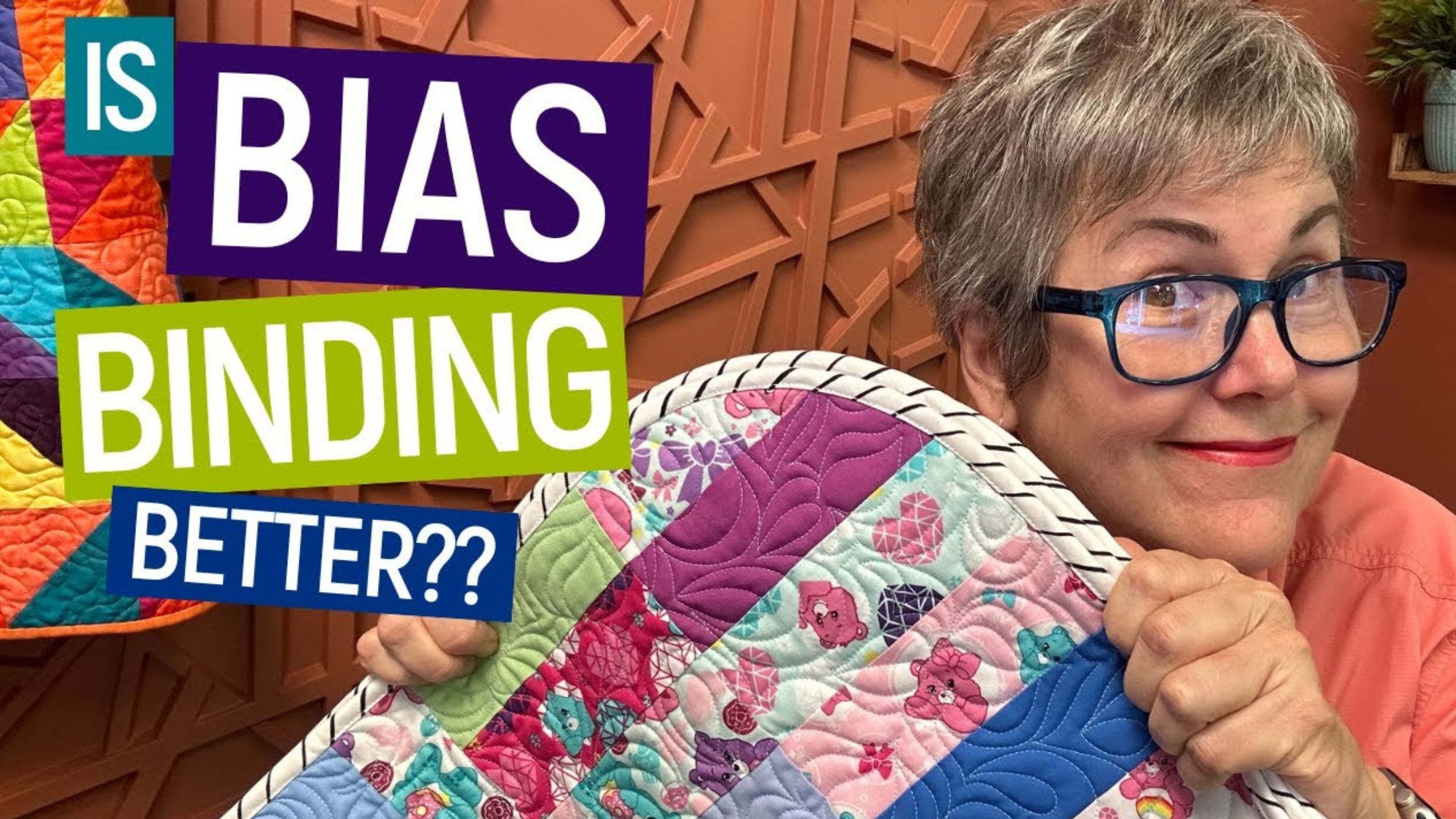
Bias Binding Made Simple: A Beginner-Friendly Tutorial with Karen Brown
Do you need to bind a quilt? Do you hate making those sharp corners? And how do you get those candy cane stripes to appear on the sides? In today’s quilting tutorial Karen Brown of Just Get it Done Quilts is diving into bias binding, a fundamental technique that can take your quilting projects to the next level. She’ll cover how to make it, when to use it, and how to make it pop.

Instructor
Karen Brown
Karen Brown is a quilter and crafter who loves to make things and check things off the list. She loves trying new things, finding short cuts and new ways of using old things and sharing that information with other quilters at Just Get it Done Quilts.
Shop this tutorial


Common Questions
What is covered in Bias Binding Made Simple: A Beginner-Friendly Tutorial with Karen Brown?
Do you need to bind a quilt? Do you hate making those sharp corners? And how do you get those candy cane stripes to appear on the sides? In today’s quilting tutorial Karen Brown of Just Get it Done Quilts is diving into bias binding, a fundamental technique that can take your...
How long is the tutorial video?
The tutorial video is 00:15:19.
Are supplies listed for this tutorial?
Yes. The tutorial page includes the supplies and materials connected to this project.
Is a transcript available?
Yes. A written transcript is available on the tutorial page.
Video Transcript
It can be made from various fabrics, including cotton, satin, or polyester. Bias binding is typically folded in half with the raw edges enclosed, and then it is stitched in place along the edge of the fabric. This technique is commonly used in garments, quilts, and other sewing projects to add a decorative or functional edge finish.