Skip to content

Free quilting video tutorials from Missouri Star

Quilting Tutorials
Homespun E27 | Amber Elliot

Homespun E27 | Amber Elliot

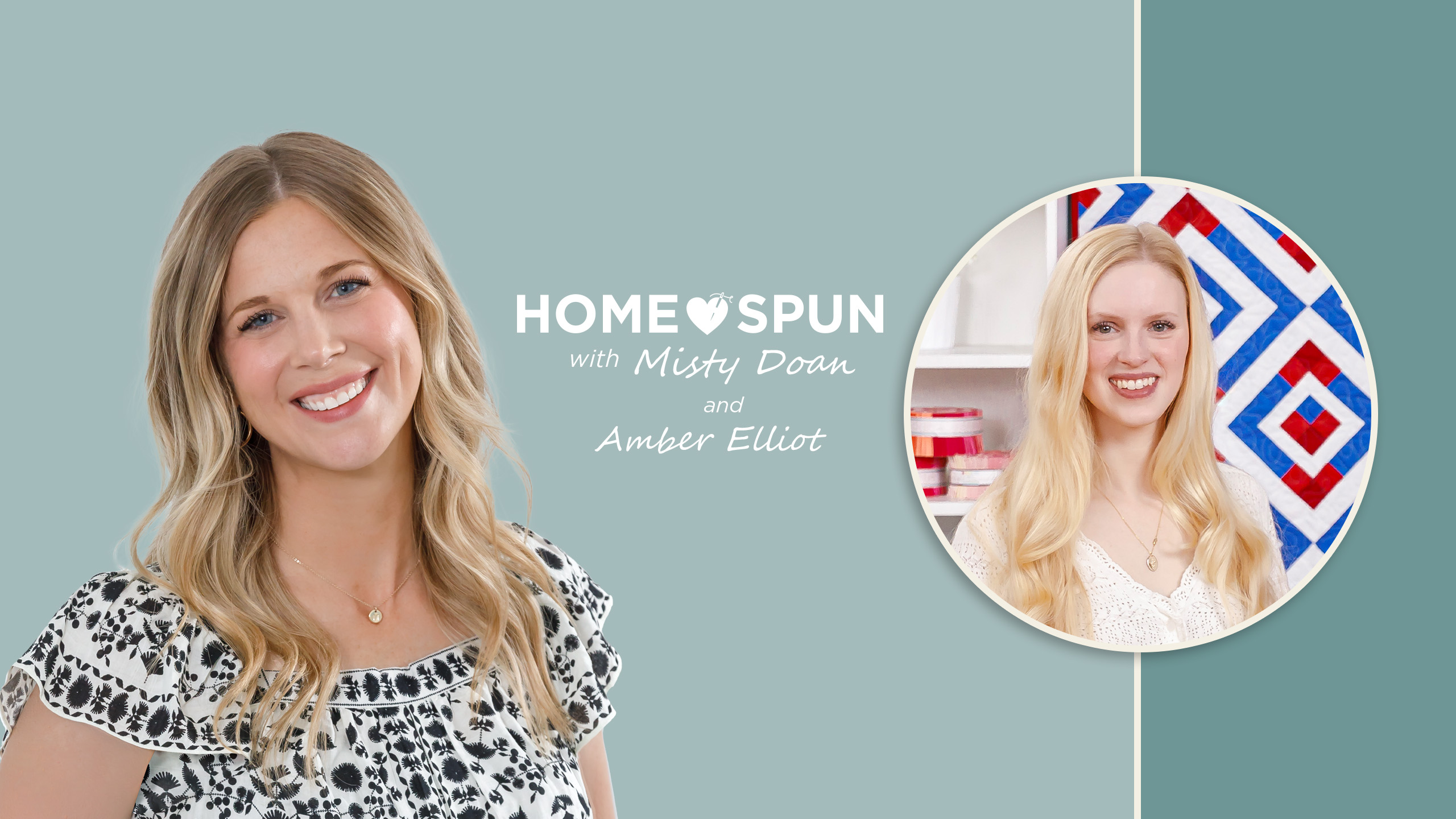
In this episode of Homespun, join Misty as she chats with quilt designer Amber Elliot of Alderwood Studio. In Misty’s interviews with designers, makers, and influencers in the world of fabric and fiber arts, you’ll meet the people who have a hand in creating the items that inspire you and spark your creative fire! Hear their stories, learn their processes, share in their joys and challenges, and see their creations.
Instructor

Misty Doan

Misty Doan grew up surrounded by sewing and quilting. She loves spending time sharing tutorials each week each week, and when she’s not stitching up one of her fun sewing projects for home decor, most likely you’ll find her hanging out with her husband and three awesome kids or working on a house project.

Chapters

  1. 0:00Intro
  2. 3:05Being a craft hopper
  3. 8:48Becoming a fabric designer
  4. 15:36The kindness in the industry
  5. 18:06Setting yourself apart
  6. 20:20What's next?

Common Questions

What is covered in Homespun E27 | Amber Elliot?

In this episode of Homespun, join Misty as she chats with quilt designer Amber Elliot of Alderwood Studio. In Misty’s interviews with designers, makers, and influencers in the world of fabric and fiber arts, you’ll meet the people who have a hand in creating the items that ins...

How long is the tutorial video?

The tutorial video is 00:25:20.
Video Transcript

hi everyone welcome to Homespun where creativity and Community come together I am your host Misty D and I'm so thrilled to be joined by Amber Elliott of Alderwood Studio she's going to share with us her journey from software engineer to pattern designer and now fabric designer Amber I'm so excited that you were able to be here with me today thank you so much for taking the time thank you it's great to be here of course so will you tell everyone a little bit about yourself and and how you got started with your business yeah my name is Amber Elliot I'm the pattern designer behind Alderwood studio and gosh I started sewing years ago when I was very little and so I've been sewing my whole life and I picked up quilting um a little bit as a teenager and by picked up I mean I went to Joann's and bought a bunch of fabric and cut it up with scissors into squares sewed it together I had no idea what I was doing um but it was fun and I kind of put it away for a while and then after college I got a little more into it you know friends started getting married having babies things like that and I always liked to make my own designs my own patterns and one day I don't even honestly remember who it was anymore but one day someone said you should write a pattern for this and I thought I can't do that but it kind of stuck in my head and kept coming back to it and eventually I decided to give it a try and things kind of went from there I love that so you said you grew up sewing so where did that love of sewing come from well I had it's funny actually I had both of my grandma's sewed but in very different ways one of them um I don't even know if she had a sewing machine maybe she did but she sewed by hand um more mending repair things like that and then my other grandma would like sew formals cuz she was involved in all of these fancy things wow so I kind of got two Polar Opposites um my first real project that I remember I was staying with my my grandmother that did not have a sewing machine for a week and she gave me a bunch of her old clothes and I cut them up and sew different things together and made this really appalling Frankenstein dress that I brought home for my mom to wear I think I was probably six or seven how cool maybe a little older I don't know but I was like look Mom I made this for you and she was a great sport she wear she wore it for really a couple hours I love that yeah yeah that is so fun and how fun that your grandma was just like have at it yeah she was very much like here you go yeah that's so cool how fun so and then like you said the polar opposite then making Formal Wear yeah yeah and so I wound up kind of going when I was younger and then a teenager I was more into like costuming and and stuff like that and I had a great time with that type of thing and um always made costumes for my family and things like that so I did a lot more kind of garment side sewing before I got into quilting okay um and know I do a little bit of a mix so can you pinpoint what was the first thing I mean you said you went to Joan fa but what were you were like I'm going to make a quilt oh my gosh you know I've always been like a craft Hopper I can't really despite the fact that eventually I did I can't quite narrow myself down into one thing um so I think it was just one of those moments where I was like oh I haven't done that yet I better try see see how it goes yeah I love that I love that you say craft Hopper because I can completely relate to that even now there's sometimes that I'm like but I'm so much more I know I think a lot of us are and honestly for me I think so I I was an engineer I was a software engineer for 10 years um before I quit my job to take Alderwood Studio full-time and that I think for a long time while I was doing both at the same time I was basically working two full-time jobs at the same time with a baby and it was totally exhausting and I had zero time for outside Hobbies right I me quilting had been a hobby and then it became a job um but I think actually really kind of embracing that as my full-time job pattern designing and running that business kind of opened me up to some other things I could pursue too because it made me feel more like well I'm not I'm not doing this as like a hobby anymore sewing is it's fun it's great but it's not like my creative Outlet quite as much anymore and it's given me a lot of freedom to go try other things which has been really fun yeah I I love that so what are some of the other hobbies that you enjoy now oh that's a good question um well I love knitting I have a sweater in my bag right around the corner there um that I'm working on so I I that's always a good go-to for me um but I also I've always loved art and I have a background in art and I kind of always hoped to become a surface pattern designer it's actually one of the reasons I did start writing quilt patterns eventually was like well I'd really like to design fabric one day and maybe getting more into the quilting space and learning more about how that works would get me there yeah um that's not quite the path I took because I wound up spending a lot more time building a quilting business than I had planned which was wonderful amazing um but I am now a fabric designer with Riley Blake so I I don't know that that's hobby as much anymore since now it's part of my business but it's really fun and I really enjoy that so and obviously one of your goals you know to have that Vision that that was something you wanted to work towards it's really great yeah so you know painting things like that I love that I love knitting gardening we have a big Garden that we spend a lot of time in and um and I also just like picking up fun new kits and trying different things you know do you do you dabble in Pottery too I feel like I've seen I don't know how iot to mention that yes I have a Pottery Studio in my garage now okay um yes that's true I took uh I took a class years ago before my before I had kids even um with my mom actually and we had a great time we were terrible at it um we were just very bad at it and it was kind of fun to embrace being terrible at something I agree I think it's good for us yeah so I did that and I really liked it and I always kind of wanted to go back but who has the time right yeah um but eventually after I had been working for myself for a while I was like hey I'm My Own Boss and instead of doing things like working at night and on weekends as my own boss maybe what I should do is say hey Amber you can have two hours every Tuesday for six weeks to go take a pottery class I love that so I finally convinced myself to do that and it was really fun again I was really bad at it and there are a lot of times where I was like well this is fun but I'm not going to keep doing it because I just cannot spend this much time doing something I'm that bad at but that's silly right I mean you're always everyone's bad at things before we're good at them I was going to say you'll never get good if you don't exactly and with something like that it's Pottery is one of those things where um something can go wrong at every stage of the process and there's you know about eight major stages yes so it's something where you it's not like with sewing you know you do something wrong you rip the seam out or you cut a new piece and and start again it's just a lot more error prone I found and I think that's actually been really good for me to kind of struggle through and and force my way through I think that could be really healthy to and just Embrace those those mistakes and those things that are just bound to happen along the way Lear to roll with ites yeah and it feels kind of freeing it's you know it's sad if you get all the way to the point where you've like got a fully formed mug you've started painting all that and then something cracks off but it's also kind of freeing to just be like all right try again yeah break it start over I love that I I I agree I've I've had a few of those lessons in my life life and and oddly enough I have not done Pottery in ages besides we did like we did take a pottery class um it was just like a free form bowl that was super super fun but I used to have like a kids's pottery wheel as a child and I loved it loved it and so it's like maybe I need to revisit that cuz there's something about getting your hands dirty and great we saw one there's a nursery near where I live that that we go to a lot and bring the kids to and they have like a little plant Shop with a little gift shop inside and um my kids were in there I was buying some plants and they were off looking at the little kids section where they have puzzles and stuff and my daughter who three yelled across me across the store at me Mama they have a potty wheel and I was like that was very loud and she's like just like yours I'm like okay pottery wheel um but so I went over and looked and the kids were both like convinced they needed it they're like we need this you have to buy it for us and I was like guys we have a real one at home not buying you this one we have a real one if you wanted try doing this we can try yeah you know that's so fun yeah we'll see if they ever give it a try they well it sounds like they you know are set up for Success so that's pretty fun well let's uh you you just barely touched on becoming a pattern or a fabric designer for Riley Blake yes uh I would love to hear more about that Journey yeah I that's been so much fun I um well I I started putting together a surface pattern design portfolio years ago okay I took Bonnie Christine emerging class um gosh I think I took it in 2020 for the first time and I had been kind of fiddling around with things before that and I finally took that and um of course we all know what happened in 2020 and I wound up home with two full-time jobs and a 2-year-old right uh no daycare wow so that kind of fell through the cracks for a while and it took us just a while to recover from that from a sense of like I don't have time to do anything right um I don't have time to invest in anything else so it took me a while to pick it back up again um but I did maybe about a year and a half later I went back and finished the class put together my full portfolio and I was able to um meet the Riley Blake team at quiltcon a couple years ago a friend of mine introduced me to them and they were all wonderful and encouraged me to submit my portfolio so I finally did took me ages but I did and it kind of all went from there that's great my first collection you know it's funny you work so far ahead right um so my first collection came out a couple months ago okay but I am currently working on my fourth oh my gosh I love that so it's it's been fun and I feel like you know you learn so much each time you make one each each new collection you just learned so much and so it's been really fun to kind of grow in that space and and learn so much about that world I love that so where did you find inspiration for your designs oh that's a good question um so well like I mentioned we have a a big Garden we spend a lot of our time outside when the weather is nice and um I just just really love plants and all of that so like many people I get a lot of natural inspiration sure um I also I live in Oregon which is really beautiful and it's a it's a really fun place because where I live I live in the suburbs but I can drive you know an hour and get to the beach I can drive another hour and I'm in the mountains I can drive another hour and I'm in like high desert forest maybe two or three hours but you get the you get the idea we have a really interesting diverse range of things and natural landscapes where I live so it's it's really fun to get a lot of inspiration from that or from like little trips we've gone on things like that yeah I love that so what would you say to someone else I I think it's really encouraging to hear your story I guess I'll start with that because you it wasn't super fast I mean I think that's really obvious that you kind of took the time for it to navigate and and to form naturally so what would you say to someone who's wanting to make that leap maybe from software engineering which feels like a big disconnect from this creative industry what's funny so first of all I I actually teach a pattern writing class I teach the pattern Writing Academy every year um and in that class we walk through basically everything you need to know to design patterns and I talk to people a lot I say it so many times in that class like this this is not a race this is a long-term project right you know I think a lot of people get really excited about joining this industry which they should it's amazing yes um but they want to jump right in and you know instantly have a million sales and be successful and quit their full-time jobs and like it's really a long-term process it's it's not a Sprint right true um and I think just knowing that and feeling really comfortable with your own goals and your own abilities and being able to kind of roll with the punches of it makes a big difference I I have a friend that we kind of started our businesses around the same time and kind of grew them together and we we talked about that often where we realized like really the thing that makes the difference between the people who don't quite make it or who quit and give up and the people who do is just the ability to say well that didn't work yeah like I made a mistake it didn't work time to move on and try something different and I mean I've made plenty of mistakes we all have and you learn a lot from trying different things I have patterns that have flopped patterns that have done way better than expected you know I have a lot I I have a lot of different things that are always on my plate and I know that some of them will be successful and some of them won't right and those are all learning experiences and sometimes I take something on knowing it won't be a huge success but it's a passion project I just really want to do it right you love it yeah so I think it's it really comes down to like really investing in learning the industry learning to do what you're trying to do um you know you don't want to release crappy patterns no one wants that it's not good for your business it's not good for other people right um and then just really being persistent and knowing it takes time and it takes a lot of hard work right you know I mean when I say before I was working multiple full-time jobs and had a baby I literally did not take a day off for probably two years I worked every night and my son would go to bed I would go back to work my husband was great he picked up whatever slack and did everything around the house um you know I I don't think I did a single load of laundry for two years wow which was hugely helpful so I was very lucky to have that kind of help um but I worked every weekend you know I there were two years where I at least checked and respond responded to my work emails on Christmas and and did some work on Christmas you know so it was a long time before I actually took days off or took weekends off or things like that so being willing to put in that work to get where you wanted to go and now I don't necessarily think everyone should do that right you know I mean I'm not saying I advocate for necess healthy boundaries yes and you know it's just that's what I did and that's how I grew my business to this point I also had deadline in my own mind where I my goal was to um be able to quit my day job after I had my second baby that was what I was really hoping I'd be able to do um and so for me there was a bit of a clock there where I was trying to make that point because I knew you know there was no way what I was doing was sustainable I couldn't work two full-time jobs one of them would have to be one yes but you know we had bills to pay obviously like everyone so I couldn't just quit my job without replacing that income right so that's it was kind of a I like to say it was a very intentional choice to live that lifestyle it's not necessarily one I recommend but if you do it you just need to have a a deadline for yourself an an in goal in mind yeah exactly yeah because it's not sustainable forever it's not but you know I I am glad I did it I'm very happy that I did that and I got there and now I'm running my own business and it's great yeah and it it you met your goal obviously which is really awesome that's exciting and it has to feel like a big achievement yes it really it really is I love that was there a mentor or someone along the way that really helped you oh gosh so many people um you know when I entered the industry I just I had so many people that I looked up to that I didn't know necessarily but I loved their work I loved how they ran their businesses and one thing that was really amazing that I found is anyone that I reached out to even if it was just like hey I'm just getting started and you know I admire your work and if you have any advice or or you know offering a pattern test for some and things like that everyone was just so kind and so welcoming and I just I I'm not going to I'm not going to name names but there were a couple people when I first started that I was really like oh my gosh they're like the the big leagues and now I have a weekly or bi-weekly phone call with them just to chat and and and brainstorm and stuff and so it's just so nice that there were so many people that came ahead of me that were so happy to act as mentors and to help me out and so I I do my best to pass that along too I feel like I'm I'm always trying to it's you know it's hard sometimes I'm sure you your inbox is very full but I always try to respond to emails like that too because I think that our community really is a situation where a rising tide lifts all boats I agree and it's really kind of nice to be able to pass that along absolutely I think it's super important and and I love that you brought that up that you know you were willing to reach out and people were kind because that has been my experience hands down I mean I think everyone is this we're really uniquely blessed in this industry that people really want to see success for others yeah and I I think that's a really beautiful thing to be a part of yeah I think so too and I you know when I started teaching pattern writing one of the CL questions I got from a couple people was like aren't you just like training your competitors it's like I I mean I just don't I don't really see it as that I have my own very unique design style and so do other people and people are going to buy my patterns or their patterns based on what they're looking for I don't really see healthy competition and I don't even want to use the word as compet you know I don't really even want to use the word competition but I don't really see that as an issue right I kind of feel like the more people that are putting their creativity out there the more other people they're encouraging to quilt and to make things and to me that's a good thing yeah I love that Viewpoint and I love that you recognize that your offering is going to be unique to you and and just strengthen the industry as a whole because I hear from a lot of people that that's one thing that kind of holds them back is they're like how do I set myself apart so can you talk a little bit about that that's a great question um so I think part of what people run into is you know you'll sit down you'll finally learn how to do all the work how to design quilts how to write the patterns all of that it's a lot of work it's a lot to figure out right and it's a lot of software to figure out and so I think people get to the point where they finally figure that out and they sit down to design something and they finally design something and it looks like a quilt and they're like oh my gosh I did it I've done it I've done it this is amazing and it is amazing and it is exciting but that's just the beginning step and I think that maybe sometimes people stop at that point they're like this is my first pattern maybe it should be their first pattern but maybe it shouldn't be and so I think what really sets people apart who have a very specific and unique design style are the people who go and design a lot they design a lot of stuff and they pick 10% of it maybe to develop further and that's one thing that I specifically have done and I have plenty of patterns that fall kind of outside my typical style and things like that like I said I like to experiment um but you know I mean I have tons of pattern designs I've come up with that will never see the light of day yeah they just you know I might like them I might think they're terrible it doesn't I might love them but know that the math is just not going to be worth it you know there are some patterns I'm like I no it's too much I love you but no no you will not be you will not turn into fabric I love that um so I think that really sets people apart is the willing this to actually develop Your Design style and that's true in any creative field I mean that's very true in art and fabric design you know no one wants to buy the same thing over and over you need to develop your own style and come up with your own very specific uniqueness I love that it's true there's so much creative play I think that goes into design in general and I find that to be the case too like I'll you know be fiddling with the design and I'll be like well this is fun but it's not right and I just you just kind of itut yeah or it's like or you know you like it but it's just not unique enough you know and like I don't I don't want to release something that's going to be like you see it and then you instantly forget what it is if that makes sense no it does I think that's really good advice so other exciting things you have coming up you have a new book I do yes so I I self-published my first book a couple years ago and I have a new book coming out with c and T um next spring in March and and it's all about ombre and gradient quilting um I personally have this is kind of embarrassing to admit but I have a hard time with color sometimes hey we all have our I know but like you know I mean I yeah I say I'm an artist I should be you know I understand the theory behind it but when it comes to making like creating a fabric pole and creating just the perfect combo of colors for a quilt I struggle sometimes and I look at people who I admire and I'm like man that's just perfect how do they come up with just those perfect colors and I realized a few years ago I kind of got into a habit of like a go-to set of colors or a go-to style and it took me a little while to realize if you if you go look at my shop and you look at my web page a lot of my cover samples are ombre quilts without being obviously ombre quilts interesting um I mean this one behind us here G this this is I made this several years ago and I didn't really intentionally make it an ombre quilt but it is yes um and so I once I kind of fully leaned into that and embraced it I realized that that's just a really good guiding path for people if you struggle with quilt patterns and color and color selections um one thing I think people think and you can kind of see by looking at this book these cover images might not be what you would typically think of as ombre a lot of people hear ombre and think a color fading in value from light to dark and that that is Ombre that is true but the definitions of ombre and gradients Vary so much industry to Industry um that they can mean all kinds of things you can have an ombre or gradient palette that goes from a color to another color you know from value light to dark there are so many different options and so in this book we talk a lot about first of all color theory there's a nice easy intro into color theory and then I talk a lot about different types of gradients um what a gradient can be and it can be a lot of different things there are all kinds of different ones awesome and it was really fun to dive into for this book because like I said I realized I went back and looked at all of my my own patterns and I was like oh this is just collection of gradients um so yeah it's just it was a really fun book to put together because I got to talk a lot about all of that and I learned it was funny because there were so many things that I was doing without realizing it and once I started actually sitting down and writing this and researching and all of that I was like oh this is this is what I've been doing I did know what I know what I was doing yes um so it has a bunch of projects in there too that that really kind of highlight different gradients and different kinds of ombre um but it also talks a lot about how to use use your own patterns or use whatever patterns you have and adapt them for ombre Quil awesome I can't wait to check it out so it's really exciting and because I know people will ask tell us the name of this beautiful quilt behind us this is the Lily quilt pattern I I designed it and named it after my daughter um I released it when she was was a year old as kind of like a a birthday thing not that she you know yeah but she didn't care in her honor yeah yeah um and it's one of my favorites I just really I really like um I don't make a lot of block-based patterns I tend to make ones that are a little bit more um just big I have a lot of mountain based patterns things like that that use Big Blocks or just row piecing or medallions things like that this is one of my favorite block-based patterns because I just really enjoy doing things like you know combining curves with other with other more graphic pieces and things like that it's beautiful it's absolutely gorgeous well I really appreciate you taking the time and so as a final question I would love to hear if you have anything else that you're looking forward to creatively on the horizon that's a great question um well you know honestly the first thing that popped into my brain is the sweater I'm just dying to finish oh I love it that's great so close um before I left to come here I was like two more rows be done there you go um but you know I really I'm excited to just keep exploring Pottery too that and and more fabric collections I think those are the things I'm most excited about from a creative standpoint right now I love that I love that so much well thank you so much for being here can you let everyone know uh where they can follow along and uh keep up with what you're doing yeah um I'm always on Instagram at Alderwood studio uh that's just Alderwood studio and then my website is Alderwood studio.com um if you just Google Alderwood Studio it's pretty easy to find yep y pretty easy to find me perfect thank you so much and I hope I get to see you again soon thanks [Music]

More Modern tutorials

See all